
How to use a nejiri gama Japanese hand hoe weeder
From the whetstone · October 2026
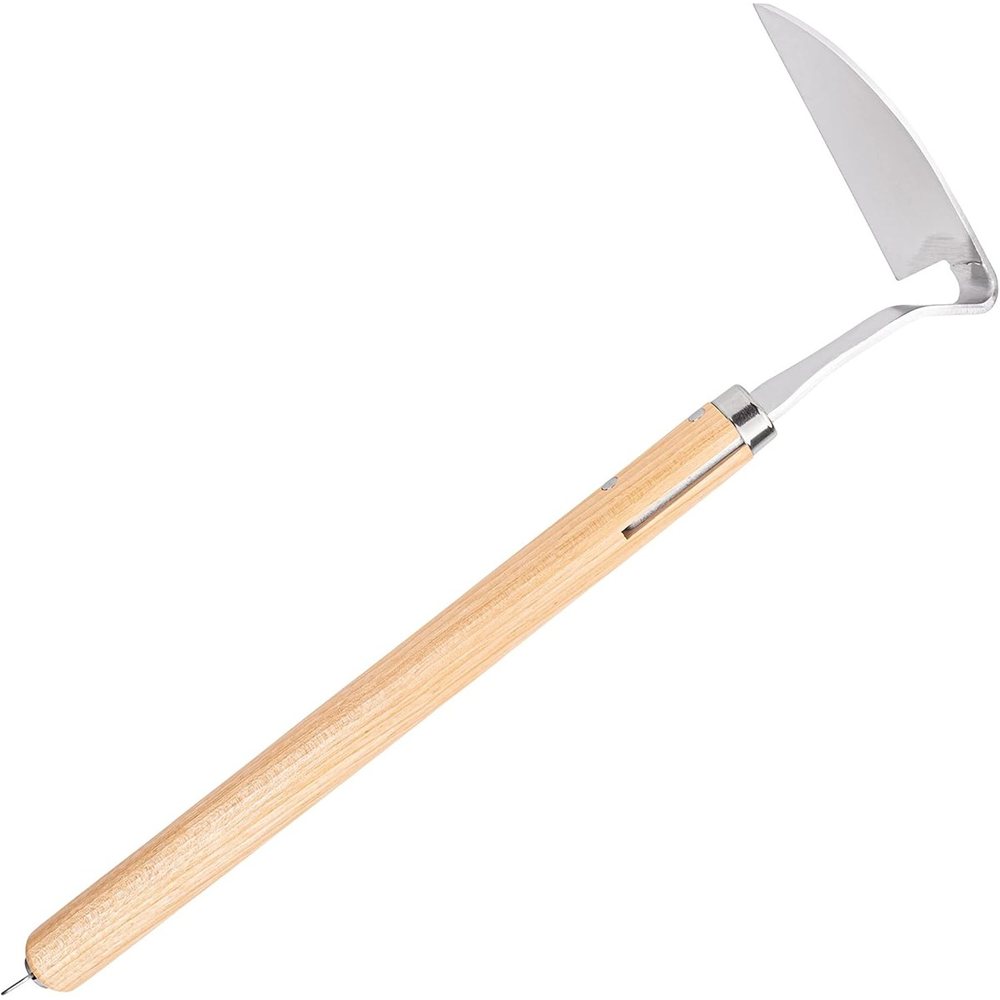
The nejiri gama is the Japanese hand hoe weeder that makes weeding feel like sweeping. Used right, this lightweight garden tool shaves weeds off at the root line in a single pull and leaves the soil where it was. Used like a Western hoe, it is hard work. Here is the difference.
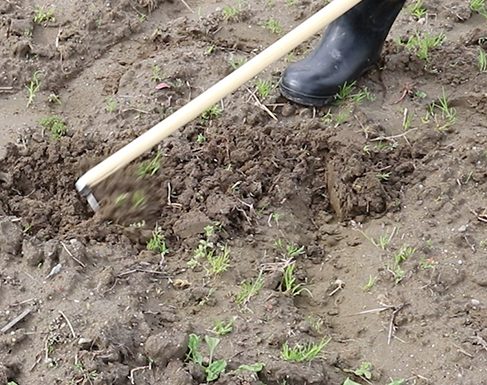
Grip, angle and the pulling stroke
Hold the hardwood handle like a pencil held low, close to the steel blade. Lay the blade almost flat on the soil, with the sharp edge facing you. The angled neck lets the blade sit flat while your hand stays above the ground, which gives the precision Japanese tools are known for.
- Push the edge just under the surface, about a quarter inch deep
- Pull toward you in a smooth stroke
- Let the blade cut weeds at the root line; do not dig
- Step back and repeat, so you never stand on cleared soil
Young weeds die when cut below the growing point. Weed weekly with a sharp blade and you will rarely meet an old one.
Using the corner
The pointed corner of the blade picks single weeds out of a crowded bed and cleans along edging and stones. Tilt the hoe onto the corner and draw it along the line.
What is the best Japanese hand hoe for weeding?
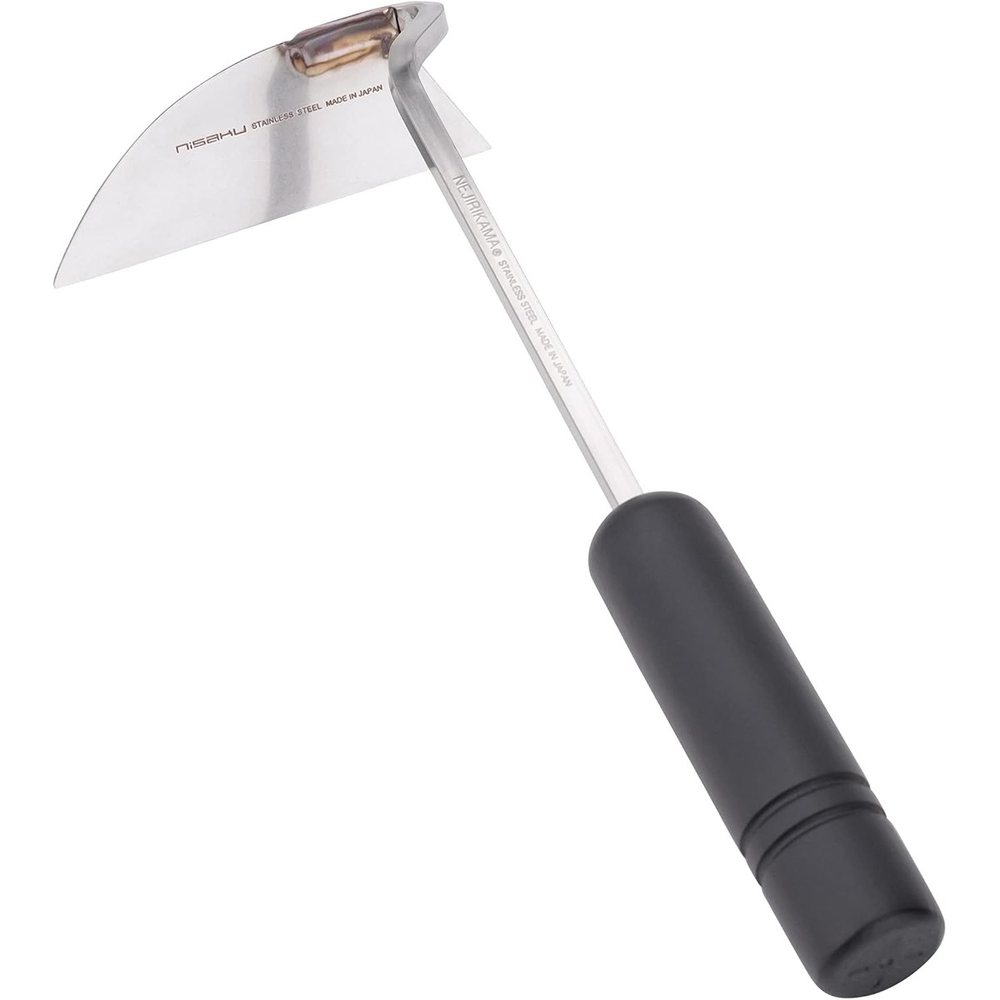
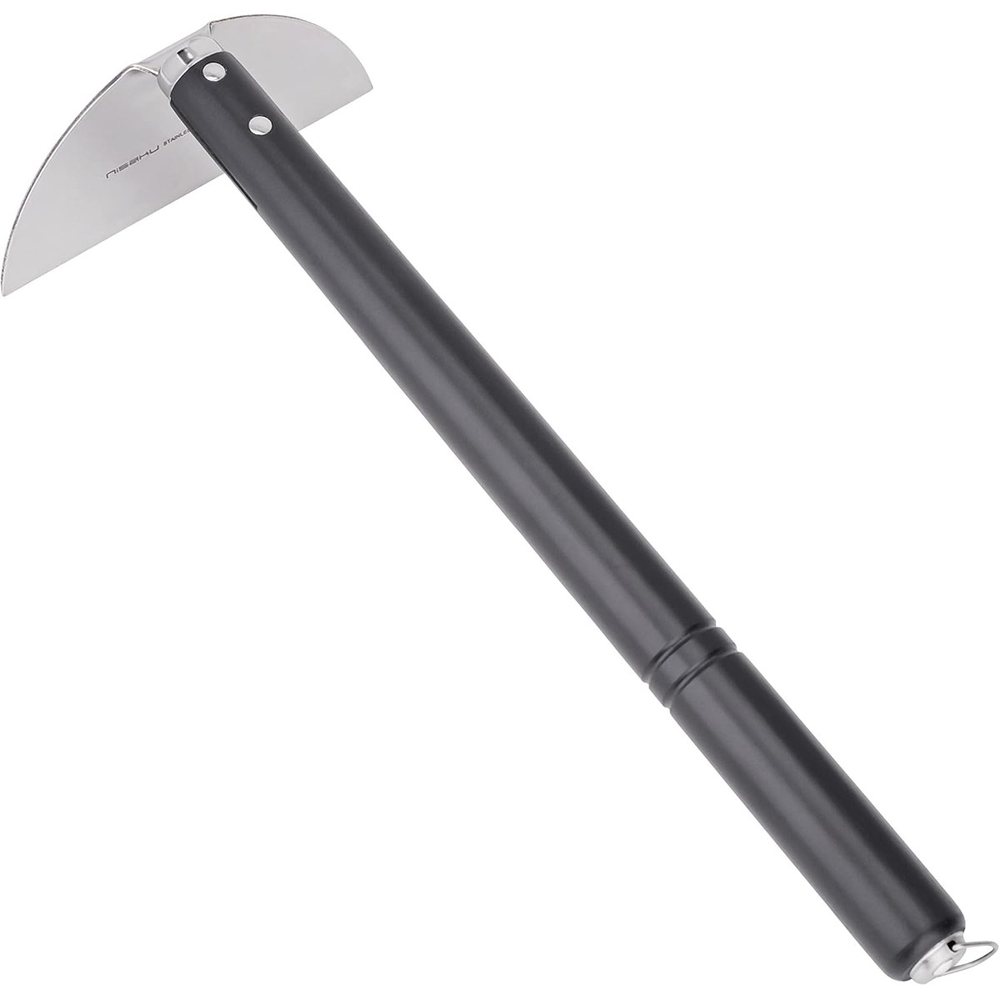
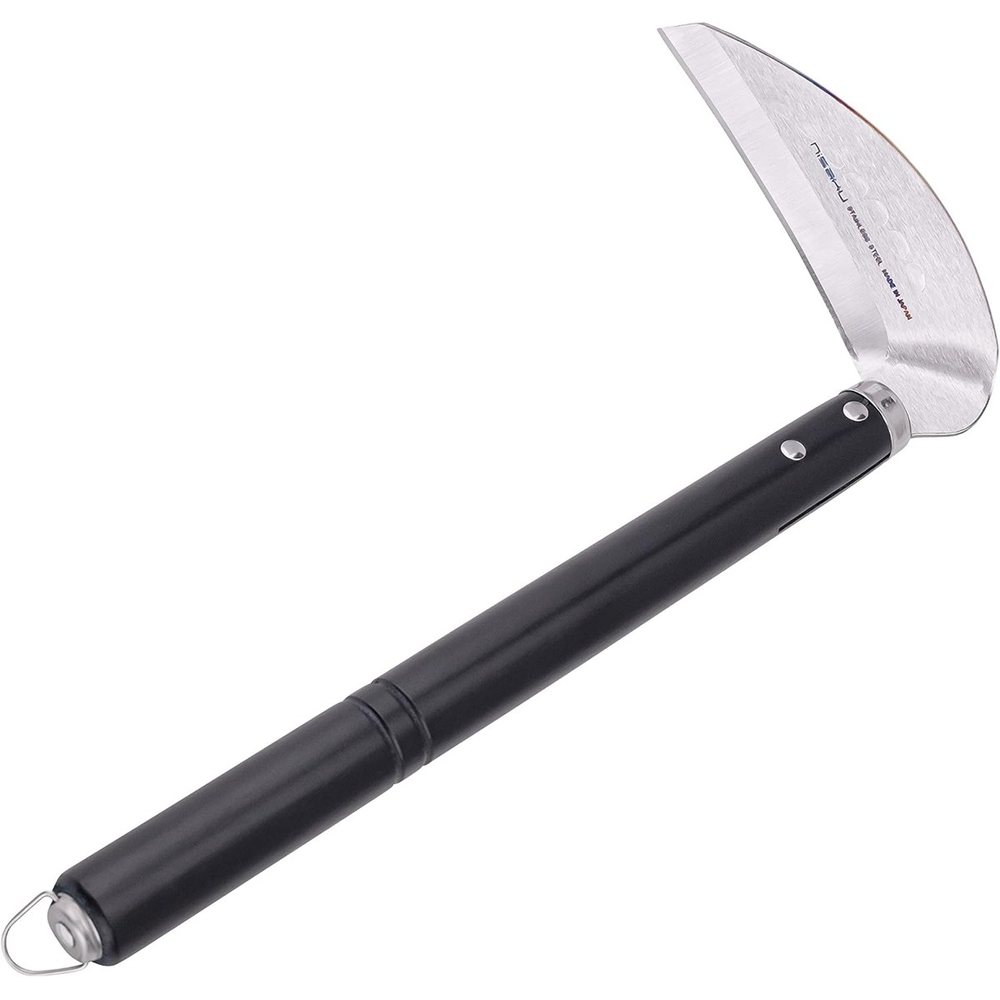
All Nisaku hand hoe tools are made in Japan from Japanese stainless steel, so the choice comes down to blade shape and handle length for your garden and your planting. For precise work in beds, the NJP100 nejiri gama with its 4-inch blade. For clearing wider areas, the NJP110 kusakaki. For grass in borders and harvesting, the NJP115 kogama with its curved, serrated blade. For narrow furrows and rocky soil, the NJP178 triangle hoe. For long rows without kneeling, the NJP1010 semi-long handle hoe.
Keeping it sharp
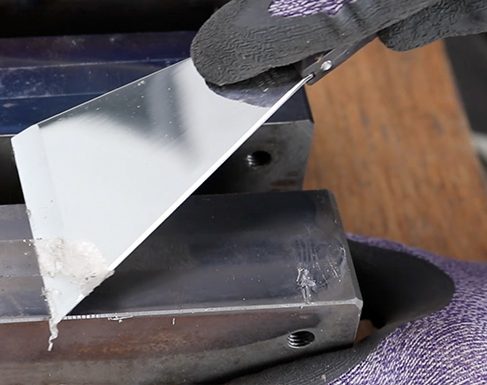
A nejiri gama is only as good as its edge. File the bevel side a few strokes at a time with a diamond file, keeping the angle of the existing bevel, then remove the burr on the flat side. Clean and dry the blade after use.
 What is a hori hori knife?
 Choosing a Nisaku hori hori knife
 Japanese garden tools explained
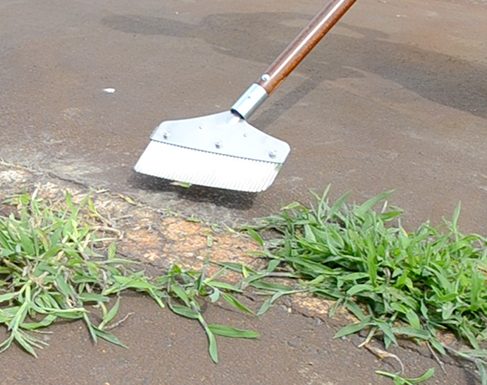 Weeds in sidewalk cracks
 Caring for Japanese stainless steel