
Caring for Japanese stainless steel
From the whetstone · October 2026
Wondering how to keep your tools sharp? Japanese stainless steel is forgiving, but a few habits keep a Nisaku blade sharp and bright for decades instead of seasons.
After every use
- Knock off soil and sap
- Rinse with water; use a stiff brush on serrations
- Dry with a rag
- Hang the tool on its peg, blade covered or facing the wall
Sharpening a straight edge
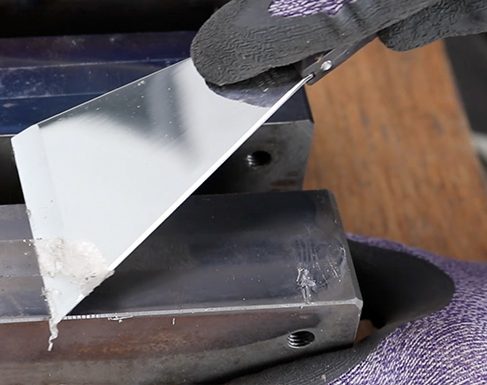
Use a fine whetstone or a diamond file. Find the existing bevel, hold the same angle, and make light strokes along the whole edge until you feel a small burr on the other side. Remove the burr with one or two flat strokes. Hardened HRC58 blades sharpen a little slower; little and often works best.
Sharpening serrations
Use a tapered rod that fits the scallops. Sharpen each one from the bevel side only, a few strokes per tooth, then remove the burr on the flat side.
Handles and sheaths
Rub a little linseed or camellia oil into wood handles once a year. Leather sheaths like a little leather balm and should dry away from heat. Rinse grit out of hard sheaths now and then: sand inside a sheath dulls an edge faster than the ground does.
Storage
A dry shed and a peg for each tool. Tools on a wall are easy to find, do not knock edges together in a bucket, and dry quickly after use.
 What is a hori hori knife?
 Choosing a Nisaku hori hori knife
 Japanese garden tools explained
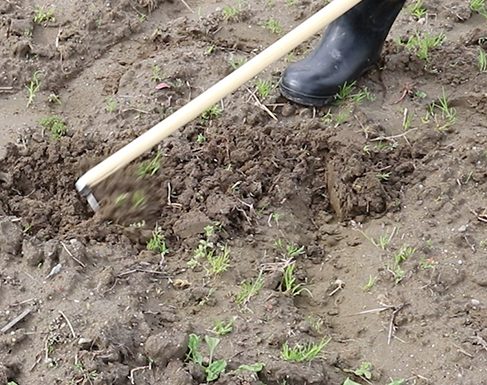 How to use a nejiri gama Japanese hand hoe weeder
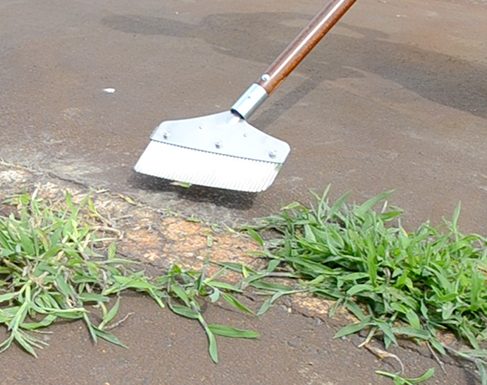 Weeds in sidewalk cracks